
Winterproof Your Landscape: Proven Deer Control Strategies to Protect Your Shrubs
Winter-hungry deer destroy thousands in landscape investments across Suffolk County. Here's how to protect your arborvitae, yews, and evergreens before it's too late.
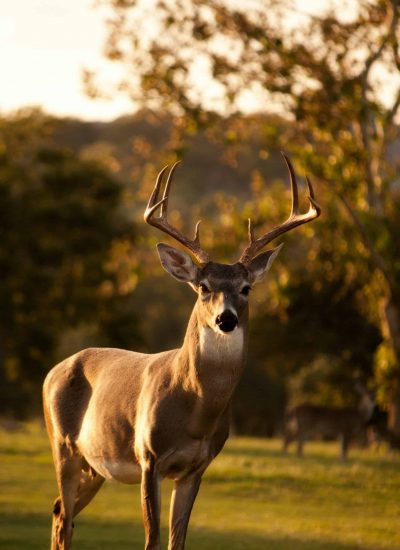
Your arborvitae hedge looked perfect in September. By March, the bottom six feet are stripped to bare wood—nothing but brown stems where dense green foliage used to be.
You’re staring at $8,000 in damage. And you’re not alone.
Thousands of Suffolk County homeowners face this same gut-punch every spring. The deer population here sits between 25,000 and 30,000, and they’re not intimidated by your house, your dog, or those motion lights you installed. When winter food disappears, your evergreens become their survival strategy.
But here’s what most people don’t know: winter deer damage is preventable. You just need to understand how deer behave when they’re desperate, which plants they’ll destroy first, and what actually stops them versus what wastes your money. Let’s break down what works.
Why Winter Turns Suffolk County Deer Into Landscape Destroyers
Deer don’t cause equal damage year-round. Spring and summer? They browse selectively. Plenty of tender growth, fresh flowers, herbaceous plants. They move between food sources without demolishing any single plant.
Winter flips the script completely. Natural food sources vanish under snow. Acorns are gone. Ground vegetation is buried or dormant. Deer face a brutal choice: find food or starve. Your evergreens stay green and accessible all winter—they’re not landscaping to a hungry deer in January, they’re emergency rations.
Arborvitae, yews, rhododendons, hollies. These plants become salad bars for desperate animals. And Suffolk County’s deer aren’t skittish woodland creatures anymore—they’re suburban-adapted, human-tolerant, and they know exactly where the easy food is.
What Plants Do Deer Target First During Winter
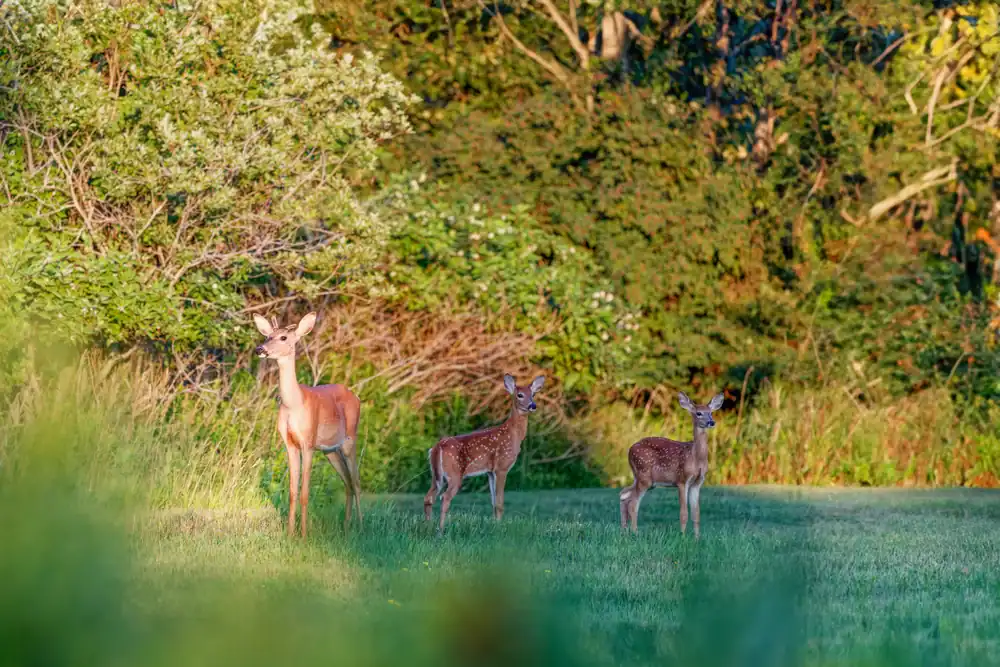
Deer will eat almost anything when they’re starving, but certain plants top their winter hit list. Arborvitae and yews are the most vulnerable evergreens in Suffolk County. Soft, palatable foliage. Easy to digest even in freezing temperatures. Deer strip these shrubs to bare wood without hesitation.
Rhododendrons, hollies, and euonymus take heavy damage too. Even plants labeled “deer resistant” get browsed when snow buries everything else. That horizontal “deer line” you see across neighborhoods—where all foliage below six feet is gone—shows you exactly how high a deer can reach while feeding.
Here’s what makes winter browsing so destructive: deer lack upper front teeth. They grab and tear instead of making clean cuts. This ripping action leaves jagged, frayed branch tips that struggle to recover. On arborvitae specifically, damaged areas often never regrow. If deer stripped away all the buds and growing points, those bare lower branches stay bare permanently.
The damage compounds over multiple seasons. Year one, deer browse the lower branches. Year two, they reach higher because last year’s damage already happened. Year three, your once-full hedge looks like a row of lollipops—green on top, bare and woody below. You’ve got thousands invested in plants that now look terrible.
Suffolk County’s deer population has adapted to suburban life over generations. They’re not spooked by motion lights, barking dogs, or houses. They’ve learned that residential landscapes offer reliable winter food, especially properties near wooded areas, wetlands, or parks. But even homes in developed neighborhoods aren’t safe—deer travel wherever food is available.
Timing matters more than most people realize. The worst browsing happens between December and March, peaking in January and February when snow cover is deepest and deer are most desperate. By the time you notice damage in early spring, it’s too late. The harm is done, and recovery takes years if it happens at all.
The Real Cost of Winter Deer Damage to Your Property
Let’s talk actual numbers. A mature arborvitae hedge costs $5,000 to $15,000 to install, depending on size and plant maturity. Deer can destroy that investment in one winter. Replacement isn’t just expensive—it sets your landscape back five to ten years while new plants establish and grow to size.
The damage extends beyond aesthetics. Property values drop when landscapes look neglected or damaged. Mature trees and healthy hedges add $10,000 to $30,000 to a home’s value according to real estate assessments. Strip away that landscaping, and you’re looking at replacement costs plus lost property value.
There’s also the health angle. Suffolk County had more Lyme disease cases than any other U.S. county in 2023, according to CDC data. Deer are the primary host for adult deer ticks, which carry Lyme disease, anaplasmosis, babesiosis, and Powassan virus. More deer browsing near your home means more ticks in your yard, increasing disease risk for your family and pets. Plant health care and deer control go hand-in-hand with tick control for complete property protection.
Most homeowners try DIY solutions first. Store-bought deer repellent sprays. Motion-activated sprinklers. Predator urine. Irish Spring soap bars hung in trees. These might work briefly on a single deer passing through. They fail spectacularly against Suffolk County’s established deer population.
Why? Our local deer have been navigating suburban landscapes for decades. They’ve encountered every home remedy available. They know which deterrents are real threats and which are just annoying. A spray that worked in rural Pennsylvania won’t fool a Long Island deer that’s been grazing residential properties for years.
The other DIY problem is consistency. Repellent sprays wash off in rain and snow. They need reapplication every two to four weeks to maintain effectiveness. Miss one application during a critical period, and deer establish feeding patterns on your property that become exponentially harder to break later.
Physical barriers work better than repellents, but they come with significant trade-offs. Eight-foot fencing keeps deer out reliably—if it’s installed correctly, maintained properly, and covers your entire property with zero gaps. That’s a major investment, and it fundamentally changes how your landscape looks and feels. For many homeowners, living behind an eight-foot fence isn’t the outdoor experience they want from their property.
Want live answers?
Connect with a Jones Tree & Plant Care expert for fast, friendly support.
Deer Control Methods That Actually Work in Suffolk County
Effective deer control starts with understanding what you’re protecting and when protection matters most. Not every plant needs identical defense. Not every season presents equal risk.
Fall is your critical planning window. September through November—that’s when you need to get ahead of deer damage, not February when your shrubs are already stripped. Deer begin feeding more aggressively in fall as they prepare for winter, targeting high-nutrient plants to build energy reserves for the cold months ahead.
The most effective strategies layer multiple approaches. Professional-grade repellents applied on a regular schedule. Physical barriers for individual high-value plants. Habitat modification to reduce deer attraction. No single method is bulletproof, but combined defenses dramatically reduce damage and protect your landscape investment.
Why Professional Deer Repellent Programs Outperform DIY
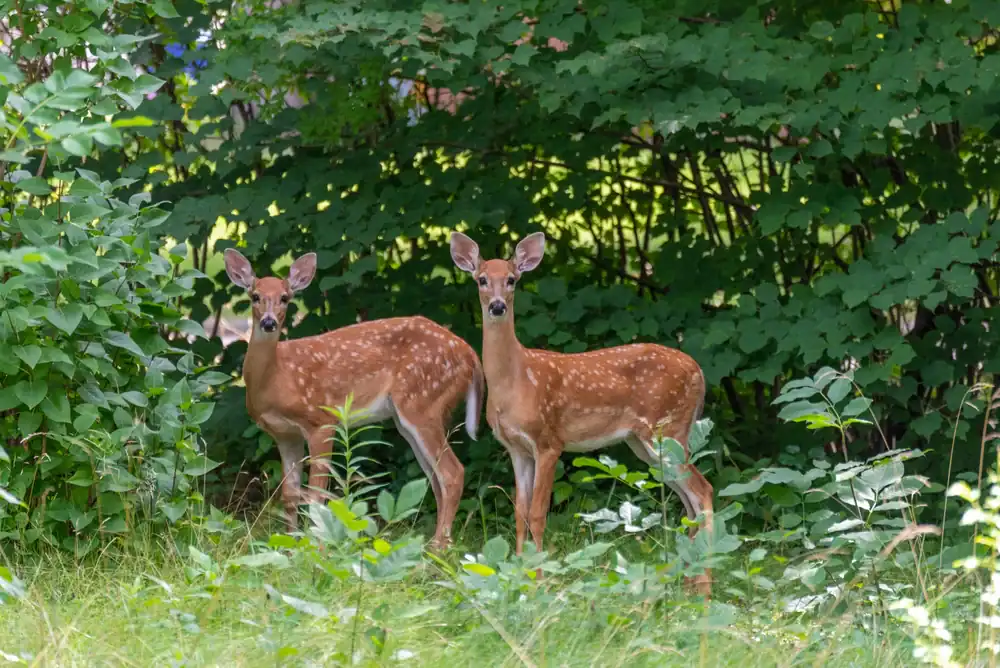
Professional deer control programs use completely different products than garden center sprays. Winter formulations are engineered specifically to withstand freezing temperatures, snow, ice, and harsh coastal conditions—the exact environment that breaks down consumer-grade products in days.
These professional-strength repellents work through taste deterrence, not smell. In winter, freezing temperatures suppress scent effectiveness almost completely. You need a product that tastes so unpleasant deer won’t eat treated plants even when they’re starving. One professional application in fall can protect through an entire winter season, versus DIY sprays that need constant reapplication and still fail.
Application technique matters as much as product quality. Deer browse from the top down, so treatment needs to start above predicted snow lines and cover all vulnerable foliage. You’re not just spraying visible plant material—you’re treating based on expected snow depth and deer feeding height, which changes throughout winter as snow accumulates.
We understand local deer behavior patterns because we’ve been working in Suffolk County since 2014. Suffolk County deer have different feeding habits than deer in other regions. They’ve adapted to coastal conditions, suburban density, and the specific plant palette common in Long Island landscapes. Treatment strategies need to account for these local patterns to be effective, not just follow generic instructions from a product label.
Timing your applications correctly makes the difference between protection and wasted money. Early applications before deer establish feeding patterns work infinitely better than reactive treatments after damage starts. Once deer learn your property offers easy food, they return regularly and bring others. Breaking that pattern requires consistent deterrence over time, not sporadic panic efforts when you notice damage.
The cost comparison surprises most people. A professional deer control program runs $400 to $800 per season depending on property size and deer pressure. Replacing a destroyed arborvitae hedge costs $5,000 to $15,000. The math isn’t complicated—prevention is dramatically cheaper than replacement, and it preserves years of growth you literally cannot buy back at any price.
How to Protect Arborvitae, Yews, and Rhododendrons from Deer
Arborvitae takes more deer damage than almost any other landscape plant across Suffolk County. The soft, scale-like foliage is highly palatable to deer, and they’ll strip these plants to bare wood if given any opportunity. Once damaged, arborvitae doesn’t recover well—that’s the critical part most homeowners don’t realize until it’s too late.
Branches browsed below the green growth zone stay bare permanently because arborvitae won’t produce new buds on old wood. You’re not looking at temporary damage that fills in next season. You’re looking at permanent disfigurement that requires either living with ugly plants or complete replacement.
If you’re planting new arborvitae, consider deer pressure before installation. Western varieties like Green Giant show slightly better deer resistance than Eastern arborvitae, though no variety is truly deer-proof in Suffolk County. Planting location matters significantly—arborvitae near wooded edges or deer travel corridors will take exponentially heavier damage than plants in open, exposed areas away from cover.
Existing arborvitae hedges need proactive protection starting in fall. Treatment should cover all foliage from ground level to at least seven feet high, accounting for snow depth that will raise deer feeding height throughout winter. We focus extra attention on the windward side of hedges where deer tend to browse first, using those areas as entry points.
Yews face similar vulnerability levels. These evergreen shrubs offer tender foliage year-round, making them prime winter targets when other food disappears. The difference is yews can recover from browsing better than arborvitae if damage isn’t catastrophically severe. Yews will produce new growth from old wood, so even heavily browsed plants can fill back in over several seasons with proper plant health care and protection going forward.
Rhododendrons and hollies represent a middle ground in deer preference. Deer browse these plants during winter, but they’re not always the first choice. When natural food is extremely scarce—after heavy snow or during prolonged cold snaps—deer will eat plants they’d normally avoid. Even varieties marketed as “deer resistant” get damaged in desperate conditions, which Suffolk County experiences regularly.
Protection strategies for these plants should match your property’s specific deer pressure. Light pressure might only require fall and winter applications. Heavy pressure—properties near large deer populations or along regular travel routes—needs monthly treatment throughout the season. Some properties with extreme deer activity need weekly applications to maintain adequate protection.
Physical protection works for individual specimen plants or small groupings. Wire cylinders at least six feet tall, installed in fall and removed in spring, provide reliable barriers. Make sure cylinders are closed on top or tall enough that deer can’t reach over them. The downside is visibility—wire cages aren’t attractive, and they’re labor-intensive to install and remove seasonally.
Burlap wrapping offers another physical barrier option for smaller, valuable plants. Wrap vulnerable shrubs completely, securing burlap with twine tied firmly. This method protects against both deer browsing and winter desiccation from wind and sun exposure—common problems in Suffolk County’s coastal environment. Remove wrapping in early spring before new growth starts to avoid trapping moisture and encouraging disease.
Protecting Your Landscape Investment from Suffolk County Deer
Winter deer damage isn’t inevitable. You can protect your landscape investment with the right strategies, applied at the right time, by people who understand Suffolk County’s specific conditions and deer behavior patterns.
Start planning your deer control program in fall, not after damage appears in spring. Focus protection on your most valuable and vulnerable plants—arborvitae, yews, rhododendrons, and other evergreens that deer target heavily during desperate winter months. Use professional-grade treatments designed specifically for Long Island’s climate, deer populations, and the unique challenges coastal properties face.
The deer population isn’t shrinking—Suffolk County’s 25,000+ white-tailed deer will keep browsing residential landscapes every winter. But you don’t have to watch thousands of dollars in shrubs get destroyed year after year while you try solutions that don’t work.
We’ve been protecting Suffolk County landscapes since 2014, with a board-certified arborist on every job who understands both plant health care and effective deer control. If you’re tired of winter deer damage, let’s talk about what actually works for your property.
Summary:
Table of Contents

Article details:
- Published by:
- Published to:
- Last modified:
- May 21, 2026
Share: