Summary:
How Salt Spray Damages Trees in Suffolk County
Salt spray isn’t just an inconvenience—it’s a physiological attack on your trees. When saltwater droplets land on leaves and needles, the water evaporates quickly, leaving behind concentrated salt crystals. These crystals burn leaf tissue on contact, creating the brown, scorched edges you see on coastal trees.
But the damage goes deeper than what’s visible. Salt disrupts your tree’s ability to absorb water and essential nutrients like magnesium and potassium. This creates a cascade of problems that weakens the entire tree, making it more susceptible to pests, diseases, and storm damage.
The Science Behind Salt-Induced Tree Stress
Understanding how salt damages trees helps explain why standard tree care often fails in coastal environments. When salt accumulates on foliage, it creates osmotic stress—essentially tricking the tree into thinking it’s in drought conditions even when water is available.
The salt crystals interfere with stomata, the tiny pores on leaves that control gas exchange and water release. This disrupts photosynthesis, the process by which trees convert sunlight into energy. Your tree essentially starts starving itself while appearing healthy from a distance.
Suffolk County’s coastal winds make this worse by accelerating water loss through damaged leaf surfaces. Trees lose moisture faster than their root systems can replace it, especially when soil salinity is also elevated from storm surge or spray accumulation. Young trees suffer most because their smaller root systems can’t compensate for the increased water loss.
The physiological stress also makes trees more attractive to pests and more vulnerable to fungal infections. What starts as minor leaf burn can quickly escalate into serious health problems that compromise the tree’s structural integrity. This is why coastal trees often fail during storms that wouldn’t affect inland trees of the same species and size.
Recognizing Salt Damage Before It's Too Late
Understanding how salt damages trees helps explain why standard tree care often fails in coastal environments. When salt accumulates on foliage, it creates osmotic stress—essentially tricking the tree into thinking it’s in drought conditions even when water is available.
The salt crystals interfere with stomata, the tiny pores on leaves that control gas exchange and water release. This disrupts photosynthesis, the process by which trees convert sunlight into energy. Your tree essentially starts starving itself while appearing healthy from a distance.
Suffolk County’s coastal winds make this worse by accelerating water loss through damaged leaf surfaces. Trees lose moisture faster than their root systems can replace it, especially when soil salinity is also elevated from storm surge or spray accumulation. Young trees suffer most because their smaller root systems can’t compensate for the increased water loss.
The physiological stress also makes trees more attractive to pests and more vulnerable to fungal infections. What starts as minor leaf burn can quickly escalate into serious health problems that compromise the tree’s structural integrity. This is why coastal trees often fail during storms that wouldn’t affect inland trees of the same species and size.
Professional Protection Strategies for Coastal Trees
Protecting beachfront trees requires a multi-layered approach that addresses both immediate salt exposure and long-term environmental stress. The most effective strategies combine preventive treatments, species selection, and ongoing maintenance tailored to coastal conditions.
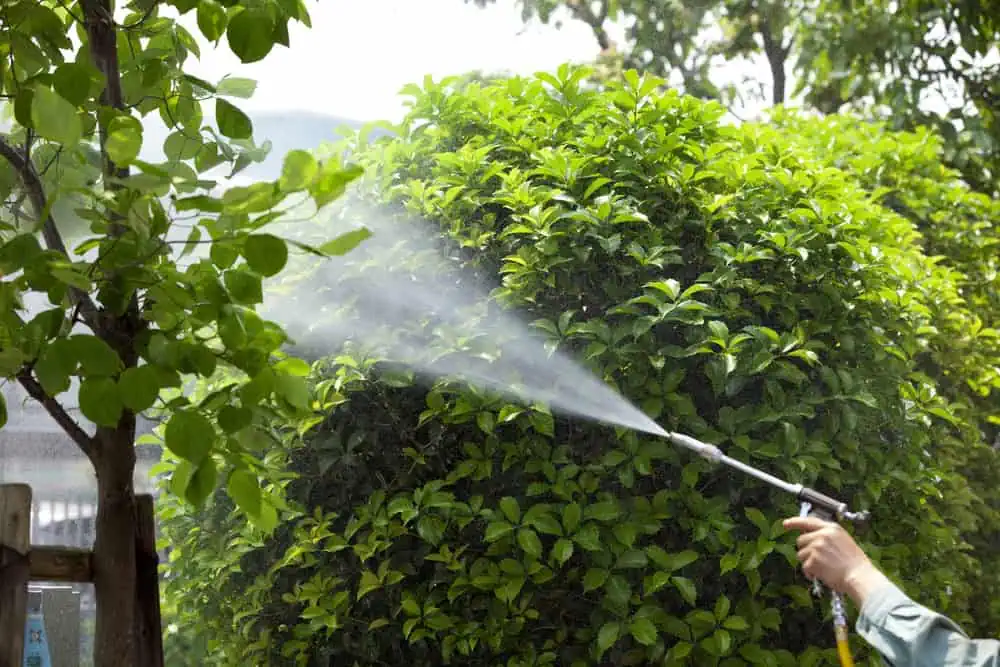
Anti-desiccant sprays form the foundation of our professional coastal tree care. These protective coatings create a barrier that reduces moisture loss while allowing trees to continue normal physiological functions. Proper application timing and technique are crucial for effectiveness.
Anti-Desiccant Sprays: Your First Line of Defense
Anti-desiccant sprays work by forming a protective film on leaves and needles that dramatically reduces water loss while maintaining the tree’s ability to photosynthesize. These organic, biodegradable treatments can reduce moisture loss by 15-20% during peak stress periods, giving trees the resilience they need to survive coastal conditions.
The timing of application is critical. We typically apply anti-desiccants in late fall before winter storms and again in mid-winter for maximum protection. The spray must be applied when temperatures are between 32°F and 50°F with no precipitation expected for at least four hours.
Not every tree species benefits from anti-desiccant treatment. Blue spruce and other conifers with natural waxy coatings should never be treated, as the spray can damage their existing protection. Broadleaf evergreens like boxwood, rhododendrons, and hollies respond best to treatment, along with most pine species and arborvitae.
The application process requires specialized equipment and expertise to ensure even coverage of all exposed surfaces. Our professional application also includes follow-up treatments as the protective coating gradually breaks down from rain, snow, and UV exposure. This ongoing protection is essential for trees facing constant salt exposure throughout the growing season.
Specialized Nutrition for Salt-Stressed Trees
Coastal soils are notoriously nutrient-poor, and salt stress further impairs your trees’ ability to absorb what nutrients are available. Our professional tree health care programs address these deficiencies with targeted fertilization that supports trees under environmental stress.
Deep root fertilization delivers nutrients directly to the root zone where trees can access them most efficiently. This method bypasses surface salt accumulation and ensures nutrients reach the tree rather than washing away with the next rain. Slow-release formulations provide sustained nutrition throughout the growing season.
Micronutrient supplementation is particularly important for coastal trees. Salt interferes with the uptake of essential elements like iron, magnesium, and potassium, leading to deficiency symptoms that weaken the tree’s overall health. Our professional programs include soil testing to identify specific deficiencies and customize treatment accordingly.
Organic soil amendments help improve the soil’s ability to retain nutrients and water while promoting beneficial microbial activity. Compost and other organic matter also help buffer soil pH, which can become elevated in coastal environments. This creates a more hospitable root environment that supports better nutrient uptake and overall tree health.
The key is working with certified arborists who understand the unique nutritional challenges of coastal environments. Generic fertilization programs often fail because they don’t account for salt interference and the rapid nutrient leaching common in sandy coastal soils.
Protecting Your Suffolk County Trees Year-Round
Coastal tree care isn’t a one-time fix—it’s an ongoing partnership between you and the harsh realities of beachfront living. The combination of salt spray, wind stress, and nutrient-poor soils creates challenges that require professional expertise and specialized treatments.
Anti-desiccant sprays and targeted nutrition programs form the foundation of effective coastal tree care, but success depends on proper timing, application techniques, and species-specific approaches. Regular monitoring and maintenance help catch problems early when treatment is most effective.
Your trees are a significant investment in your property’s value and your family’s safety. Don’t leave their health to chance in Suffolk County’s demanding coastal environment. Contact Jones Tree and Plant Care to develop a comprehensive protection plan that keeps your landscape thriving year-round.