Summary:
Why Standard Equipment Can't Reach Oak Tree Canopies
Most residential and even many commercial sprayers simply lack the power to reach the tops of mature oak trees. A typical garden sprayer might reach 15-20 feet under ideal conditions. Even professional-grade equipment often maxes out around 30-40 feet.
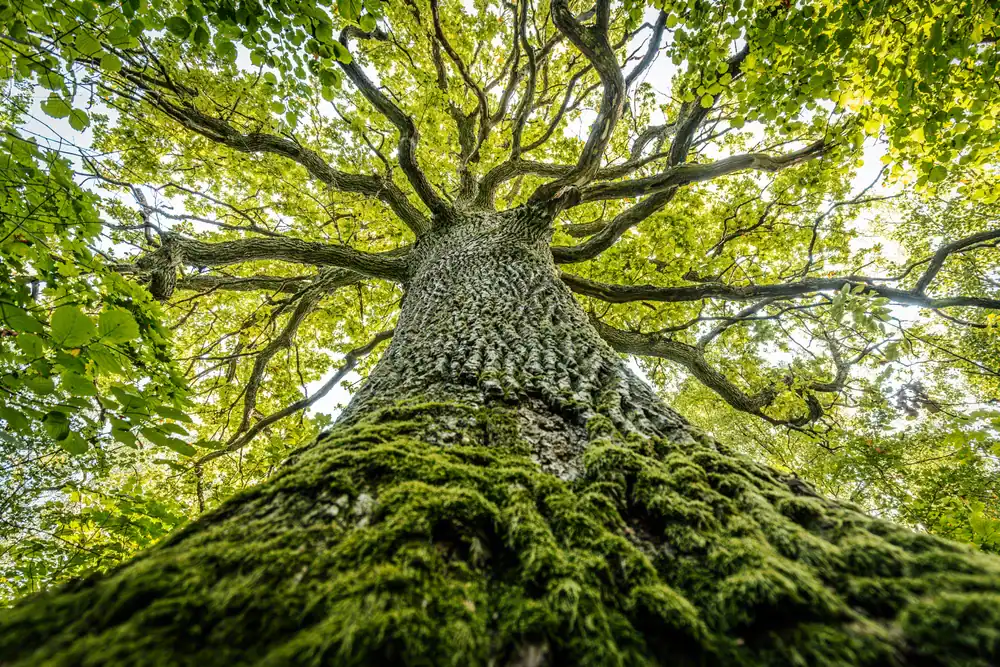
But here’s the problem: Suffolk County’s mature oaks commonly reach 60-80 feet in height. The upper canopy—where sunlight is strongest and conditions are optimal—is exactly where many destructive pests prefer to establish themselves. Spider mites, aphids, and other insects thrive in these unreachable areas, feeding on new growth and weakening your tree from the top down.
The Physics Behind High-Pressure Tree Spraying Equipment
Professional high-pressure tree sprayers operate on different principles than standard equipment. These systems typically require tank capacities of 200+ gallons, high-flow diaphragm pumps capable of 500-700 psi, and specialized spray guns designed for long-range application. The combination creates enough force and volume to propel treatment solutions vertically to heights of 80 feet or more.
The key components work together systematically. Large tank capacity prevents cavitation and maintains consistent pressure throughout the application. High-pressure pumps generate the force needed to overcome gravity and wind resistance. Long-range spray guns feature internal tubing and adjustable nozzle tips that can be fine-tuned for maximum distance and coverage.
Weather conditions play a crucial role in effective application. We typically avoid spraying when winds exceed 10 mph or during temperature extremes. Early morning applications often provide the best conditions, with minimal wind and optimal humidity for treatment adhesion. The goal isn’t just reaching the canopy—it’s ensuring the treatment stays where it’s applied and penetrates effectively throughout the foliage.
What Happens When Pests Establish in Unreachable Areas
Professional high-pressure tree sprayers operate on different principles than standard equipment. These systems typically require tank capacities of 200+ gallons, high-flow diaphragm pumps capable of 500-700 psi, and specialized spray guns designed for long-range application. The combination creates enough force and volume to propel treatment solutions vertically to heights of 80 feet or more.
The key components work together systematically. Large tank capacity prevents cavitation and maintains consistent pressure throughout the application. High-pressure pumps generate the force needed to overcome gravity and wind resistance. Long-range spray guns feature internal tubing and adjustable nozzle tips that can be fine-tuned for maximum distance and coverage.
Weather conditions play a crucial role in effective application. We typically avoid spraying when winds exceed 10 mph or during temperature extremes. Early morning applications often provide the best conditions, with minimal wind and optimal humidity for treatment adhesion. The goal isn’t just reaching the canopy—it’s ensuring the treatment stays where it’s applied and penetrates effectively throughout the foliage.
How Atomized Mist Technology Ensures Complete Coverage
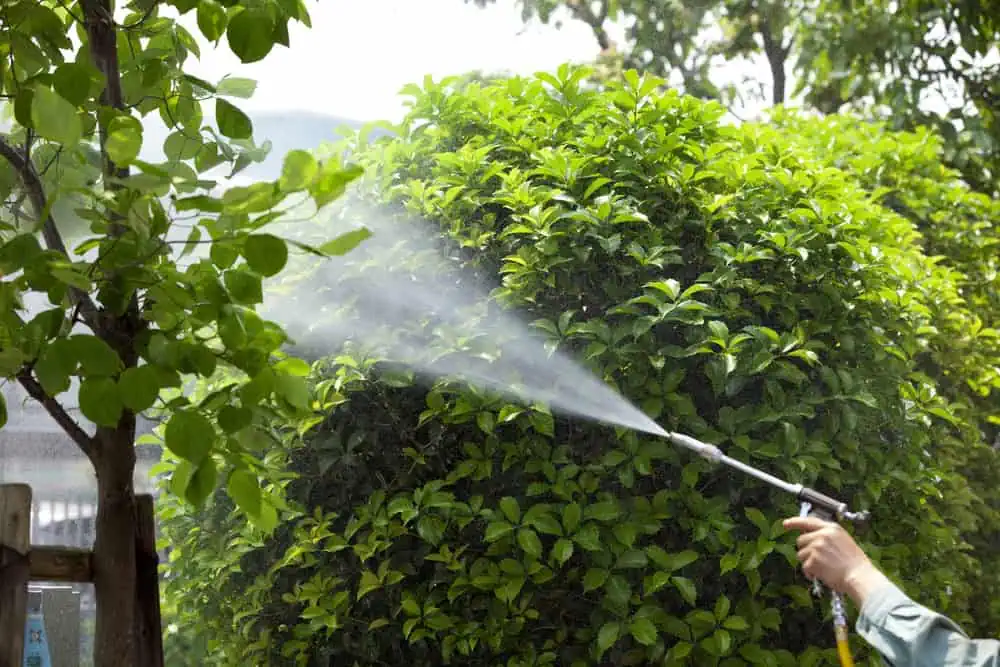
High-pressure tree sprayers don’t just reach tall heights—they deliver treatment through atomized mist technology that ensures every leaf surface receives coverage. This isn’t the heavy, dripping spray you might see from garden equipment. Professional systems create fine droplets that penetrate dense foliage and coat leaf surfaces evenly.
The atomization process breaks treatment solutions into microscopic particles that behave differently than larger droplets. These smaller particles can navigate through dense canopy layers, reaching interior branches and the undersides of leaves where many pests hide and feed.
The Science of Droplet Size and Coverage
Effective tree spraying requires understanding the relationship between droplet size, coverage, and pest control efficacy. Research shows that droplets in the 100-300 micron range provide optimal coverage for most tree pest applications. Larger droplets tend to bounce off leaves or roll away before being absorbed, while smaller droplets may drift away from the target area.
Our high-pressure systems allow us to adjust droplet size based on specific conditions and treatment goals. For systemic insecticides that need to be absorbed by the tree, slightly larger droplets work better. For contact pesticides that need to coat leaf surfaces thoroughly, finer atomization provides superior results.
Wind conditions, humidity, and temperature all affect how atomized treatments behave once they leave the spray gun. We monitor these conditions carefully and adjust our techniques accordingly. We may modify spray patterns, change nozzle configurations, or delay applications until conditions improve. This attention to detail ensures that treatments reach their intended targets rather than drifting away or evaporating before contact.
Coverage Patterns That Reach Every Branch
Achieving 100% canopy coverage requires systematic application patterns that account for tree structure and growth habits. Oak trees have complex branching patterns with dense interior foliage that can block spray penetration. We approach this challenge by working from multiple angles, ensuring that treatment reaches all areas of the canopy.
The process typically involves starting from the top of the tree and working downward, allowing gravity to assist with coverage. We move around the tree’s perimeter, adjusting spray angles to penetrate interior branches. We pay special attention to areas where branches fork or where dense foliage creates shadowed zones that pests often prefer.
Modern spray guns feature adjustable patterns that can be modified from narrow streams for long-distance reach to wider cones for broader coverage. This flexibility allows us to customize our approach based on tree size, shape, and specific pest pressure. The goal is ensuring that no area of the canopy remains untreated, eliminating refuges where pest populations could survive and reestablish.
Professional Tree Health Care for Suffolk County Properties
Protecting your mature oak trees requires more than just the right equipment—it demands expertise in local pest pressures, disease risks, and environmental conditions specific to Suffolk County. We understand which pests are most problematic in our area and when they’re most active. We can identify early signs of stress or infestation that property owners might miss.
The investment in professional tree health care pays dividends in tree longevity, property value, and peace of mind. When you work with certified arborists who have the specialized equipment to reach every part of your oak’s canopy, you’re ensuring comprehensive protection that standard treatments simply cannot provide. For Suffolk County property owners with mature oaks, we offer the expertise and high-pressure equipment necessary to keep these valuable trees healthy and thriving for generations to come.