
Summary:
Step 1: Accurate Diagnosis of Tree and Problem
The foundation of tree spraying is diagnosis. Professionals must first identify the tree species and the exact pest or disease causing issues. Trees carry vulnerabilities and treatment sensitivities; different kinds of insects and diseases require different management strategies. Misidentification leads to using the wrong product. As spring progresses in Suffolk County, certain issues like emerging caterpillars or early fungal leaf spots become common, needing on-time identification.
Why Tree Species Identification Matters
Knowing more about tree species is important. An oak tree in Suffolk County might face specific borers, while a pine contends with scale insects or needle cast. Maples might deal with anthracnose. Furthermore, some tree species are sensitive (phytotoxic) to certain spray ingredients that are safe for others. Applying the wrong chemical could damage a sensitive species’ leaves or health. Correct identification informs both the diagnosis and the selection of tree pest control or disease management products, confirming compatibility and preventing unintended harm to the plant itself.
Pinpointing the Specific Pest or Disease
Identifying the exact cause requires careful examination. Professionals look for signs: chewed or discolored leaves, visible insects or their life stages, sticky honeydew, sooty mold, frass (insect excrement), fungal bodies, cankers, or canopy thinning. Sometimes insect control for trees is needed for pests like aphids, mites, scale, or borers. Other times, a tree disease treatment using a tree fungicide manages issues like anthracnose or powdery mildew. Accurate problem identification dictates the specific type of treatment required for management and resolution of the issue affecting the tree.
Step 2: Considering Timing and Environment
Selecting a treatment involves more than the tree and the problem. Environmental context and timing are critical. Weather plays a huge role; spraying is ineffective before rain, and wind causes drift. Temperature restrictions apply to certain products, like horticultural oils. The presence of beneficial insects must be considered, aiming for treatments with minimal impact on them. Proximity to gardens, ponds, or play areas influences product choice and application. Critically, the life cycle stage of the pest or disease dictates optimal treatment timing.
Treatment Options and Application Methods
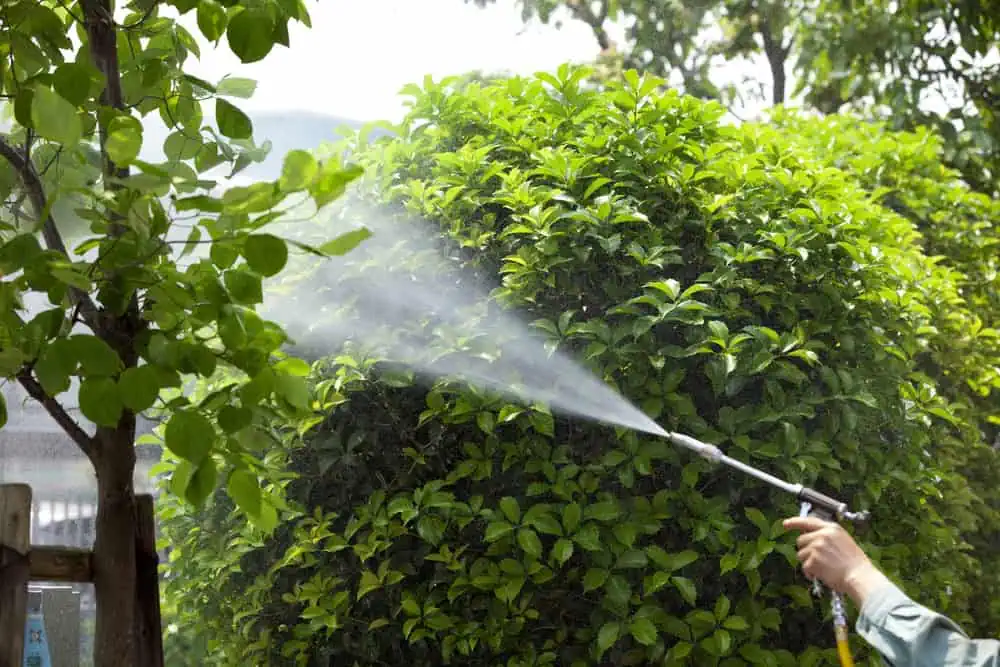
Based on diagnosis and context, appropriate options are weighed. Treatments include contact products or systemic ones (absorbed by the tree). Options range from horticultural oils and insecticidal soaps to targeted synthetic insecticides or specific tree fungicide applications. Application methods vary; hydraulic sprayers offer canopy coverage, while targeted injections or soil drenching deliver systemic products with minimal drift. The goal is selecting the most effective yet least detrimental method for the situation, often following Integrated Pest Management (IPM) principles for responsible care and long-term tree health.
The Critical Importance of Treatment Timing
Timing applications correctly is necessary. Many treatments work only during specific pest life stages (e.g., scale crawlers) or disease cycles (e.g., preventative fungicide before infection). Spraying too early or late renders treatment useless. Applying dormant oil requires specific temperatures before buds break. Spraying during flowering can harm pollinators active in Suffolk County now in late April. A professional understands these biological windows to maximize effectiveness and minimize negative impacts on the tree and surrounding environment, leading to better results from the chosen tree spraying.
Ensuring Effective and Responsible Tree Care
Determining the right tree spraying is a careful process. It starts with precisely identifying the tree species and the problem. Next, environment and timing based on pest/disease life cycles are considered. Finally, the most suitable treatment and application method are implemented. For Suffolk County homeowners needing effective tree care, contact Jones Tree and Plant Care for professional diagnosis.