
Summary:
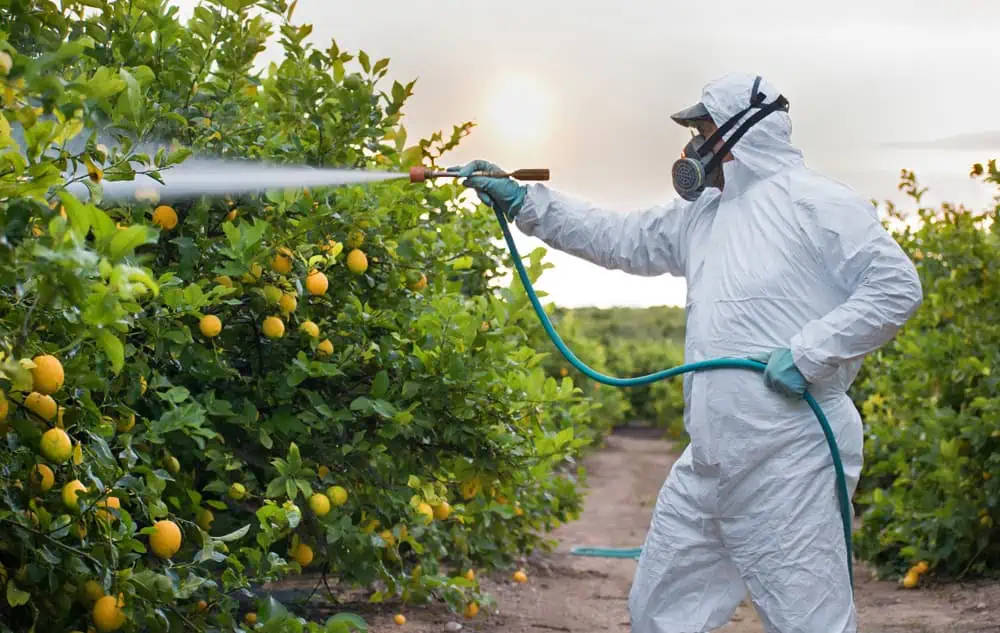
If you’ve noticed your trees looking off — sparse canopy, browning leaves, bark that doesn’t look right — you’ve probably started searching for someone to come take a look. And you’ve probably found no shortage of companies willing to show up with a spray rig and a quote. The harder part is figuring out which one actually knows what they’re doing.
Suffolk County has a real pest and disease problem right now. Spotted lanternfly, emerald ash borer, oak wilt — these aren’t abstract threats. They’re active here, and they don’t wait around. Choosing the right tree sprayer isn’t just about price. It’s about whether the person treating your trees can correctly identify what’s wrong before anything gets sprayed.
What to Look for in a Tree Spraying Company in Suffolk County, NY
Here’s something most homeowners don’t know: New York State does not require a license to operate a tree service company. Anyone can hang a shingle, buy a spray rig, and start taking calls. That’s not a knock on the industry — plenty of experienced operators work here — but it does mean the burden of vetting falls entirely on you.
The credential that actually matters is ISA certification, issued by the International Society of Arboriculture. It’s accredited to ISO 17024, the same international standard used for professional certifications in medicine and engineering. It’s publicly verifiable — you can look up any arborist’s name in the ISA’s online directory before you sign anything.
If a company can’t give you a specific certified arborist’s name to verify, that’s worth noting. We can — and we encourage clients to check.
ISA Certified Arborist vs. Board Certified Arborist: What's the Real Difference?
The word “certified” gets used loosely in this industry. You’ll see it on almost every tree company’s website in Suffolk County, but it doesn’t always mean the same thing. There are meaningful tiers within ISA certification, and they’re not equivalent.
The ISA Certified Arborist credential is the base-level professional certification — it requires passing a standardized exam and demonstrates a solid foundation of arboricultural knowledge. That’s a legitimate credential, and it’s more than most unlicensed operators have.
Above it sits the Board Certified Arborist designation, which represents a higher level of expertise, additional testing, and deeper professional experience. It’s not a minor distinction. When you’re trusting someone to diagnose what’s happening to a mature oak or a stand of ash trees on your property, the level of training behind that diagnosis matters.
A board-certified arborist isn’t just running through a checklist — they’re reading the tree, the soil, the surrounding conditions, and the history of what’s been done to it. This also connects to a question worth asking any company you’re considering: will the credentialed person actually be on your property, or are they back at the office while a crew handles the work?
There’s a real difference between a company that has a certified arborist on staff somewhere and one where that person is the one walking your yard, making the call, and overseeing the treatment. For something as consequential as diagnosing oak wilt or spotted lanternfly damage, you want the expert present — not just affiliated.
New York’s lack of a licensing requirement makes this question even more important. The credential on the website is only meaningful if the credentialed person is actually doing the work. Ask directly. A straightforward answer is a good sign.
Why Suffolk County's Soil and Pests Make Diagnosis Critical
Suffolk County’s tree health challenges are specific to this place. The soil here is sandy and glacial — a legacy of the last ice age — and it drains nutrients before roots can fully absorb them. Salt spray from both Long Island Sound on the North Shore and the Atlantic on the South Shore adds additional stress to trees throughout the county. These aren’t conditions you’ll find in most tree care textbooks, and a generic treatment plan designed for average suburban soil will underperform here.
On top of that, Suffolk County is dealing with active invasive pest pressure that requires correct identification before any treatment can work. Spotted lanternfly has established populations across the county and targets over 70 plant species. Emerald ash borer — which has killed hundreds of millions of ash trees across North America — is confirmed here. Oak wilt can kill a red oak in a single season, sometimes in a matter of weeks if it’s not caught early.
Hemlock woolly adelgid, aphids, eastern tent caterpillars, and bark beetles round out a long list of active threats. The symptoms often overlap, which is where diagnosis-before-treatment becomes the line between a company that helps and one that wastes your time and money.
Spotted lanternfly, EAB, and oak wilt can all produce similar-looking symptoms to an untrained eye. Spray the wrong thing, or spray the right thing at the wrong time, and the tree continues to decline while you assume it’s being treated. Treatment windows for something like spotted lanternfly are time-sensitive — each application has a limited effective window, and the season runs spring through fall when trees are actively growing. Getting the timing wrong matters.
A qualified tree sprayer in Suffolk County should be able to walk your property, correctly identify what’s affecting your trees, explain the treatment plan in plain language, and tell you what to expect. If the conversation jumps straight to pricing without a real diagnostic conversation first, that’s a signal worth paying attention to.
Questions to Ask Before You Hire a Tree Sprayer in Suffolk County
Most homeowners don’t know what to ask, and most companies don’t volunteer the information that would actually help you compare them. A few direct questions go a long way.
Start with credentials: Is there a named, ISA-certified arborist on your team, and can I verify that in the ISA directory? Will that person be on my property, or will a crew be handling the work? From there, ask about the diagnosis process — how do you determine what’s affecting my trees before deciding what to spray? And ask about products: are organic options available, and how do you decide which approach is right for a given situation?
Is Organic Tree Spraying Effective in Suffolk County?
This comes up a lot, especially from homeowners with kids, dogs, or vegetable gardens nearby. The short answer is yes — organic tree spraying can be genuinely effective, but the key word is “can.” It depends entirely on matching the right product to the right pest at the right time, which circles back to diagnosis.
Organic treatments work well for many common pest and disease problems when they’re correctly selected and applied during the right window. Where they fall short is when someone reaches for an organic option without first confirming what they’re actually treating. The product category doesn’t determine the outcome — the accuracy of the diagnosis does.
For Suffolk County homeowners who want organic options, the important thing to know is that this shouldn’t be an either/or conversation. We offer both organic and conventional treatments — and make the call based on what the situation actually requires. Some pest pressures respond well to organic approaches. Others, particularly aggressive invasives like EAB, may require conventional treatments to be effective.
New York State also requires any business applying pesticides commercially to be registered with the DEC and employ at least one certified commercial applicator. This applies regardless of whether the products are organic or conventional. It’s another verifiable credential worth asking about, and a legitimate company will have no hesitation answering it.
Do You Really Need One Company for Trees, Ticks, Deer, and Everything Else?
A lot of Suffolk County homeowners end up managing three or four separate vendors for problems that are actually connected. One company for tick control. Another for tree spraying. Someone else for deer damage. It works, technically, but it creates gaps — and the problems on your property don’t stay neatly in their own lanes.
Deer carry ticks. Tick control products interact with the broader plant environment. A tree weakened by nutrient-depleted soil is more vulnerable to pest damage. When different companies are handling different pieces of the picture, nobody has the full view. Treatments can work at cross-purposes, and issues that span categories — like a deer-browsed shrub that’s now stressed and susceptible to disease — fall through the cracks.
There’s a practical case for working with a provider who covers the full scope: tree spraying, tick and mosquito control, deer control, goose removal, plant health care, deep root fertilization, and tree planting. Not because it’s more convenient (though it is), but because the person making decisions about your property actually understands how everything connects. A coordinated care plan from one team is more coherent than a patchwork of separate programs that were never designed to work together.
This matters especially on the East End, where properties in East Hampton, Sag Harbor, and Southampton deal with high deer pressure, dense tick populations, Canada geese on waterfront lots, and mature tree canopies that have been under stress for years. The problems compound. The solutions should too.
For homeowners in western Suffolk County — Smithtown, Centereach, Hauppauge — the picture is somewhat different in scale but not in complexity. Spotted lanternfly is active across the county. Tick pressure is real everywhere. Trees under chronic soil stress from Long Island’s sandy glacial composition need consistent care, not a one-time spray and a handshake.
Finding the Right Tree Sprayer in Suffolk County
Look for a named, verifiable arborist credential — ideally Board Certified — and confirm that person will actually be on your property. Ask how they diagnose before they treat. Make sure the company is DEC-registered for commercial pesticide application. And look for someone who understands Suffolk County’s specific conditions, not someone running a generic program that was designed somewhere else.
The trees on your property are a real investment, and the pests and diseases active in this county right now don’t give you a lot of margin for a misdiagnosis. Getting this decision right matters more than getting it fast.
We offer free on-site consultations across all of Suffolk County. Reach out by phone or text — we’re straightforward about what we see and what we’d recommend.