Summary:
If you’ve found a tick on your child or your dog after an afternoon in the backyard, you already know the answer to “should I do something about this?” The harder question is what to do — and whether the spray a company puts on your yard is going to solve one problem while creating another.
That’s the real anxiety behind organic tick and mosquito control. You want protection. You also don’t want to wonder whether it’s safe to let your kids play outside the next morning. This page is here to give you a clear, honest look at what organic spray actually is, how it works, and whether it’s the right call for your Nassau County property.
What Is Organic Tick Spray — and What's Actually in It?
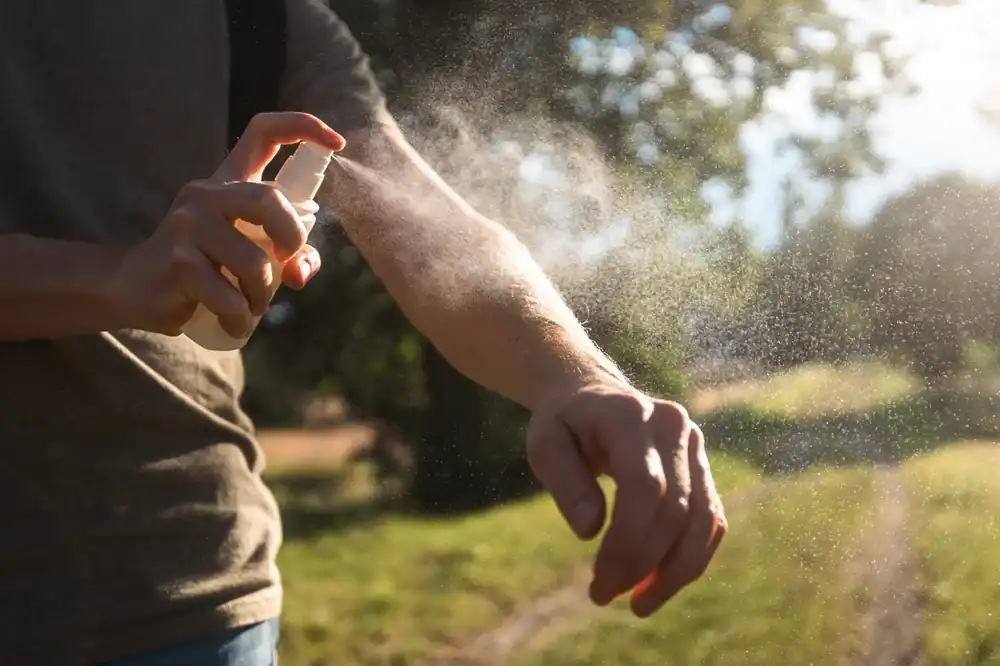
The word “organic” gets used loosely in pest control marketing, so it’s worth being specific. In a legitimate context, organic tick spray refers to products made from botanical-derived active ingredients — plant-based compounds that disrupt tick and mosquito biology without relying on synthetic chemicals. The most common active ingredients include cedar oil, pyrethrin (derived from chrysanthemum flowers), clove oil, and other essential oil-based formulas.
These aren’t folk remedies. Pyrethrin, for example, has been recognized as an insecticidal compound since around 1800 and works by attacking the nervous system of insects on contact. Cedar oil works differently — it blocks tick scent receptors, disrupts their body systems, and desiccates younger ticks on contact. When you see an Organic Materials Review Institute (OMRI) seal on a pest control product, that’s a third-party confirmation that the formula meets standards for organic use — not just a marketing claim.
Is Organic Tick Spray Safe for Kids, Pets, and Vegetable Gardens?
This is the question most Nassau County homeowners are actually asking when they search for organic options. The short answer is yes — botanical-based tick and mosquito sprays have a dramatically better safety profile than synthetic alternatives. But it’s worth understanding why, rather than just taking a company’s word for it.
Synthetic pyrethroid-based sprays (the conventional option) are designed to persist in the environment for longer periods, which is part of why they’re effective — and part of why many providers require you to stay off your lawn for up to 24 hours after application. That re-entry window is a signal. It tells you something about what’s in the product. Organic botanical-based sprays, by contrast, typically require only about 15 to 30 minutes of dry time before the treated area is safe for children and pets to use again.
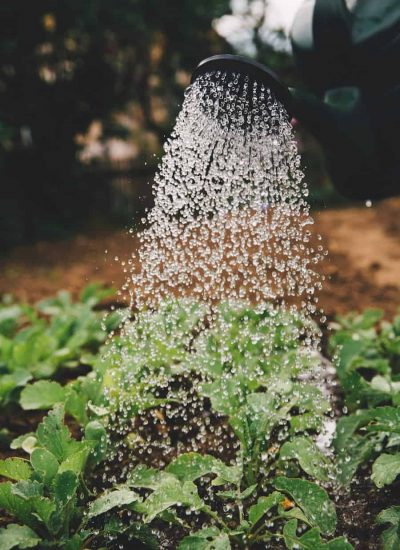
For families with vegetable gardens — and plenty of Nassau County homeowners have them — the distinction matters even more. Properly applied cedar oil and pyrethrin-based sprays don’t contaminate edible plants or harm beneficial insects like bees and butterflies when treatment is targeted correctly. That last part is key: targeted correctly. A blanket spray approach applied without regard for plant type or location is a different situation than a precision application focused on tick habitat zones.
It’s also worth noting that even organic pesticides carry some degree of risk if misused. The New York State DEC requires a valid Pesticide Applicator License for all commercial applicators — including those using botanical-only products. That’s not a technicality. It’s the state’s way of acknowledging that application method, concentration, and timing matter regardless of what’s in the bottle. When evaluating any provider, asking to see their license and the product label is a reasonable and recommended step.
Does Organic Tick Spray Actually Work, or Is It Just Weaker?
This is the objection that holds a lot of homeowners back, and it’s a fair one. If you’ve ever tried a cedar oil concentrate from an online retailer and found it underwhelming, your skepticism is grounded in a real experience. The issue, though, is usually not the chemistry — it’s the application.
Professional-grade organic tick spray for yard use works because of how and where it’s applied, not just what’s in it. Ticks don’t distribute themselves evenly across your property. They concentrate in specific micro-habitats: the border where your lawn meets a wooded edge, rock walls, woodpiles, ground cover beds, and shaded areas under shrubs and understory vegetation. These are the zones where ticks wait — typically no more than 18 to 24 inches off the ground — for a passing host.
A professional applicator who understands tick biology targets those hot zones precisely. That means treating 15 to 20 feet into woodland transition areas, focusing on shrub beds and foundation plantings, and timing applications to the tick life cycle — nymphs in May through July (when they’re the size of a poppy seed and nearly impossible to see), and adults from October through November, when they’re still active on Long Island well into the fall.
DIY products applied across a general lawn area miss most of this. The concentration is often lower, the equipment isn’t calibrated for the task, and without knowing where to look, you’re spraying the wrong places. That’s why store-bought organic sprays disappoint — and why the same active ingredients, properly deployed, can be highly effective. Tick spray organic in name and organic in practice are two different things when one is applied by someone who actually knows where ticks live.
Organic Tick Spray for Yard Use in Nassau County, NY: What the Local Numbers Say
Nassau County isn’t a hypothetical tick risk. In 2024, the New York State Department of Health recorded 521 confirmed Lyme disease cases in Nassau County. In 2019, that number was 136. That’s nearly a fourfold increase in five years, and it tracks with what Long Island homeowners are experiencing firsthand — more ticks, more diagnoses among neighbors and family members, more urgency around doing something real about it.
The NYSDOH rates Long Island’s tick encounter risk at 3.7 out of 5.0, classified as “high.” That rating applies to both adult and nymphal blacklegged ticks, which are the primary carriers of Lyme disease, anaplasmosis, and babesiosis. Beyond Lyme, Nassau County also sees cases of ehrlichiosis and Rocky Mountain Spotted Fever — diseases carried by the Lone Star and American Dog ticks, both of which are present on Long Island.
Which Nassau County, NY Neighborhoods Have the Highest Tick and Mosquito Pressure?
Nassau County isn’t uniform when it comes to tick and mosquito risk, and understanding where the pressure is highest helps explain why a targeted, professional approach matters more than a general one.
The North Shore communities — Oyster Bay, Syosset, Woodbury, Jericho, Glen Cove, Locust Valley — carry the heaviest tick pressure within the county. These areas are more wooded, have larger lot sizes, and support significant white-tailed deer populations. That last point is critical: deer are the primary reproductive host for adult blacklegged ticks. Wherever deer move through a neighborhood regularly, tick populations follow. A yard that backs up to a wooded corridor in Oyster Bay or Woodbury faces a fundamentally different reinfestation pressure than a more open suburban lot — which is why a one-time spray is never enough, and why seasonal programs running from April through November are the standard of care.
The South Shore communities — Massapequa, Merrick, Wantagh, Oceanside — face a different but equally real problem. Coastal wetland adjacency creates ideal mosquito breeding conditions. Standing water near Great South Bay, drainage channels, and low-lying areas give mosquitoes exactly what they need to reproduce in volume. Mosquitoes are vectors for West Nile Virus, Zika, and Eastern Equine Encephalitis, all of which have been documented in Nassau County’s surveillance programs.
For homeowners in either part of the county, the takeaway is the same: the risk is local, it’s documented, and it’s getting worse. Organic mosquito and tick control isn’t a lifestyle preference at this point — it’s a practical response to a measurable public health trend.
What Makes the Best Mosquito and Tick Spray for Yard Use — and How to Evaluate Any Provider
Not all organic tick and mosquito programs are the same, and the gap between a well-executed seasonal program and a basic spray-and-go service is significant. Here’s what actually separates quality organic pest control from the rest.
The first thing to look for is targeted application. The best mosquito and tick spray for yard use isn’t the one with the most coverage — it’s the one applied in the right places. Understory vegetation, shaded areas, property borders, stone walls, and ground cover beds are where ticks and mosquitoes actually concentrate. A provider who sprays the open lawn and calls it done is missing most of the problem.
The second is timing. Organic programs should be scheduled to align with tick life cycle stages — nymphal activity peaks from May through July, adult tick activity runs through November on Long Island. Monthly applications across that window maintain the barrier rather than letting it lapse between treatments.
Third, ask about credentials. Consumer Reports explicitly recommends asking any pest control provider for a current license, the product label for whatever is being applied, and evidence of appropriate protective gear. In New York, a valid Pesticide Applicator License from the DEC is legally required for any commercial applicator — organic or not. Beyond that, a provider with an Integrated Pest Management (IPM) background will approach your yard as an ecosystem to understand, not just a surface to spray.
We’re a New York State Board Certified Arborist and plant health care company — not a pest control franchise. When we evaluate a property for tick and mosquito treatment, we’re reading the yard through the lens of plant health: where the deer browse, where the understory is dense, where the shade and moisture create ideal tick habitat. That’s a different starting point than a general exterminator brings, and it leads to more precise, more effective treatment. We also offer deer control services — and reducing deer pressure on a property is one of the most effective upstream strategies for reducing tick populations over time, something no pest-only company can offer.
Organic Tick and Mosquito Control in Nassau County, NY: The Bottom Line
Organic tick and mosquito spray is safe — when the right products are used, applied by a licensed professional, in the right places, at the right times. The safety concern that brings most Nassau County homeowners to this question is legitimate, and the answer is genuinely reassuring. Re-entry times of 15 to 30 minutes, no harm to vegetable gardens or pollinators, and botanically derived active ingredients with decades of documented use — that’s a meaningful difference from synthetic alternatives.
But “organic” on a label isn’t enough on its own. What makes a seasonal program actually work is the expertise behind the application: knowing where ticks live, when they’re most active, and how to treat a Long Island yard as the specific ecosystem it is — not a generic lawn to be coated and billed.
If you’re in Nassau County and you’re ready to take tick and mosquito pressure seriously this season, Jones Tree and Plant Care is worth a conversation. We bring arborist-level plant health knowledge to every property we treat, and we’re happy to walk you through exactly what a program for your yard would involve.